Injection Molding: Holding Pressure Time Setting Techniques
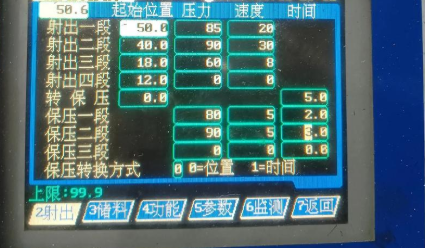
Holding pressure time is a critical parameter that determines a part's dimensional accuracy, surface quality, and internal density. Its primary function is to compensate for volumetric shrinkage during cooling by packing additional melt into the cavity before the gate freezes. Setting the optimal time requires balancing material properties, part geometry, mold design, and processing conditions.
1. Core Principles
The upper limit of holding time is determined by the gate freezing time. Holding pressure is only effective before the gate solidifies; applying pressure afterward is ineffective and increases internal stress. The goal is to achieve complete compensation without over-packing.
2. Setting Techniques by Dimension
A. By Material Properties
Crystalline Materials (PP, PE, PA, POM): High shrinkage rates (1%–3.5%) require longer holding times. For example, a 3mm thick PP part typically needs 10–15 seconds.
Amorphous Materials (ABS, PC, PMMA): Low shrinkage rates (0.4%–0.8%) allow shorter holding times. A 3mm thick ABS part usually requires 6–10 seconds.
Filled/High Viscosity Materials: Glass-filled plastics may need 10–20% more time due to poor flowability, while some high-viscosity materials (like LCP) cool rapidly, limiting the effective holding window.
B. By Part Geometry
Wall Thickness: The most significant variable. Use the formula: Holding Time (s) ≈ Wall Thickness (mm) × 3–5. Thicker walls (5mm+) need 15–25 seconds, while thin walls (1mm) may only need 2–4 seconds.
Complexity: Ribs, bosses, or thick sections require longer holding to prevent sinks. Use multi-stage holding (high pressure short, then low pressure long) to avoid stress concentrations.
Accuracy: High-precision parts (gears, connectors) demand fine-tuning (±1–2s) to meet tight tolerances.
C. By Mold Design
Gate Size/Type: Small gates (pin-point) freeze fast, requiring shorter holding times (4–6s for ABS). Large gates (edge/fan) freeze slower, allowing longer holding (8–10s for ABS).
Cooling Efficiency: Efficient cooling reduces the holding time needed. Poor cooling (e.g., high mold temperature for PC) may require a 30% extension in holding time.
Cavity Layout: In multi-cavity molds, balance flow paths. Cavities farther from the sprue may need slightly longer holding or differential pressure settings.
3. Practical Setup Procedure
Estimate: Calculate a base time using the wall thickness formula.
Test & Adjust: Start with a short time. If sink marks appear, increase by 1–2s. If warpage or cracking occurs, decrease by 1–2s.
Optimize Pressure: Match time with pressure—High Pressure/Short Time for thin walls, Low Pressure/Long Time for thick walls.
Verify Gate Freeze: Open the mold immediately after injection. If stringing occurs, the gate is liquid (increase time). If the gate is clean and solid, the current time is the effective maximum.
4. Critical Notes
Over-Holding: Causes excessive internal stress, leading to warpage, difficult ejection, and cracking (especially in brittle materials like PMMA/PC).
Under-Holding: Causes sinks, short shots, and poor dimensional stability.
Machine Variability: Older machines may require a 10–20% extension in holding time due to slower response rates.
5. Summary
The key to setting holding time is to compensate for shrinkage before the gate freezes while minimizing internal stress. Success depends on analyzing material shrinkage rates, calculating based on wall thickness, evaluating gate and cooling design, and fine-tuning through trial runs. This ensures parts are free of sinks and dimensionally stable.