Melt index of common plastics
Melt Flow Index (MFI), or Melt Flow Rate (MFR), is a fundamental metric for evaluating the flowability of thermoplastics. It measures the mass of polymer (in grams) that flows through a capillary die in 10 minutes under specific temperature and load conditions. A higher MFI indicates lower viscosity and better flowability, making it suitable for thin-walled or complex injection molding. Conversely, a lower MFI implies higher viscosity, which is ideal for extrusion, blow molding, or structural parts requiring high mechanical strength. It is crucial to note that MFI values are only comparable when tested under identical conditions (e.g., temperature and weight), as specified by standards such as ASTM D1238 or ISO 1133.
1. Commodity Plastics
Commodity plastics are characterized by high production volumes and broad applicability. Their MFI ranges are well-defined and directly influence processing methods:
Polyethylene (PE)Tested at 190°C / 2.16kg:
LDPE: Range 0.3~50 g/10min. High-flow grades are used for films and toys, while low-flow grades are suitable for pipes.
HDPE: Range 0.1~30 g/10min. Values below 1 are typical for pressure pipes due to high rigidity, whereas values above 20 are used for caps and thin containers.
LLDPE: Range 0.5~20 g/10min. It balances strength and processability, primarily used for stretch and agricultural films.

Polypropylene (PP)Tested at 230°C / 2.16kg:
General Range: 1~100 g/10min.
Homopolymer: Typically 5~20 g/10min, offering good rigidity and heat resistance.
High Flow: Values above 30 are ideal for thin-wall packaging and high-speed injection molding.
PP-R (Pipe Grade): Range 0.2~3 g/10min, where ultra-low flow ensures pressure resistance for hot water systems.
Polystyrene (PS)Tested at 200°C / 5kg:
GPPS: Range 1.0~30 g/10min. It offers high transparency and excellent flow, suitable for precision electronics and CD cases.
HIPS: Range 1.0~15 g/10min. Rubber modification reduces flow slightly but provides essential impact resistance for appliances.
ABSTested at 220°C / 10kg:
Range: 1.0~30 g/10min, with 10~20 being the standard range.
Properties: Flowability decreases with higher butadiene (rubber) content. It balances rigidity and toughness, widely used in automotive interiors and consumer goods.
PVC
Note: MFI is rarely used due to thermal instability. Processability is assessed by viscosity grade. Rigid PVC is used for pipes and profiles, while flexible PVC is used for cables and films.
2. Engineering Plastics
Engineering plastics offer superior mechanical properties and heat resistance. Their MFI values are more specific and often influenced by additives:
Polyamide (PA / Nylon)
PA6 (235°C / 2.16kg): Range 10~60 g/10min (20~40 typical for injection molding).
PA66 (275°C / 5kg): Range 15~80 g/10min, offering higher heat resistance than PA6.
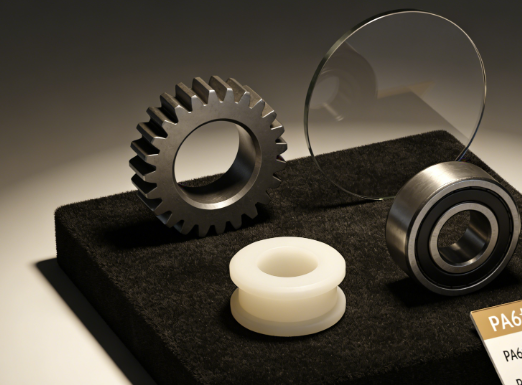
GF Reinforced: PA6-GF30 (~50) and PA66-GF30 (~40) maintain good processability despite significant strength enhancements.
Polycarbonate (PC)Tested at 300°C / 1.2kg:
Range: 3.0~30 g/10min.
Properties: Generally high viscosity. Low values (<5) are used for safety gear like bulletproof glass, while standard values (5~20) suit optical lenses and electronics.
Polyoxymethylene (POM)Tested at 190°C / 2.16kg:
Homopolymer: Range 1.9~21 g/10min, known for high crystallinity and wear resistance.
Copolymer: Range 1.0~12 g/10min, offering better thermal stability.
Common: 2~15 g/10min is standard for precision gears and bearings.
Polyester (PET / PBT)
PET: Bottle and fiber grades use Intrinsic Viscosity (IV). Engineering grades (280°C / 2.16kg) range from 10~50 g/10min.
PBT (250°C / 2.16kg): Range 10~60 g/10min (20~40 typical). It enables fast cycling for connectors and automotive lighting.
3. Application Guidelines
Material Selection: Adjust MFI based on part geometry. High MFI is required for thin walls to ensure complete filling, while low MFI is preferred for structural components to maximize strength.
Supplier Data: Always refer to the manufacturer's Technical Data Sheet (TDS) for exact values and specific processing parameters, as these can vary between grades.
In summary, MFI serves as a critical bridge between material properties and manufacturing processes. Understanding these ranges allows for efficient material selection and optimization of injection molding and extrusion operations.