Methods for Precise Debugging of Temperature Parameters in Injection Molding
cavity filling and product cooling setting. Precise temperature debugging can reduce defects such as short shots, sink marks, warpage and flash, improve product dimensional accuracy and appearance consistency, and extend the service life of molds and equipment. It is not a single parameter adjustment, but needs to be combined with plastic material characteristics, mold structure, product specifications and equipment performance, following the principles of matching material properties, increasing temperature from low to high, segmented control and full-process coordination. The following are the core debugging methods for the three key temperature modules (barrel, nozzle, mold), as well as common defect correction and practical skills.
1. Core Principles of Temperature Debugging
Match material inherent properties:Clarify the recommended temperature range of materials first. Crystalline materials (PE, PP, PA, POM) need controlled plasticizing temperature to ensure crystallinity; amorphous materials (ABS, PC, PMMA) must avoid high-temperature decomposition, with temperature not exceeding the upper limit or falling below the lower limit.
Gradual fine adjustment from low to high:Start debugging at the lower limit of the recommended temperature, and increase temperature step by step according to trial mold results, with each adjustment controlled at 5-10℃ to prevent molten material thermal degradation or product defects caused by sudden mold temperature changes.
Independent segmented control:Control barrel, nozzle and mold temperatures separately, with each module's temperature matching its molding function, avoiding process imbalance caused by abnormal temperature of a single module.
Adapt to mold and equipment specifications:Properly raise barrel temperature for small molds and thin-walled products to improve melt fluidity; focus on mold temperature control for large molds and thick-walled products to ensure uniform cooling; appropriately increase barrel temperature for old injection molding machines to compensate for heat loss of heating systems.
2. Step-by-Step Precise Debugging of Three Core Temperature Modules
(1) Barrel Temperature: Segmented Heating for Uniform Plasticization
Follow the stepwise temperature rise principle, with temperatures increasing in the feeding, compression and homogenization sections at a gradient of 10-20℃, to avoid premature plasticization and ensure uniform melt plasticization.
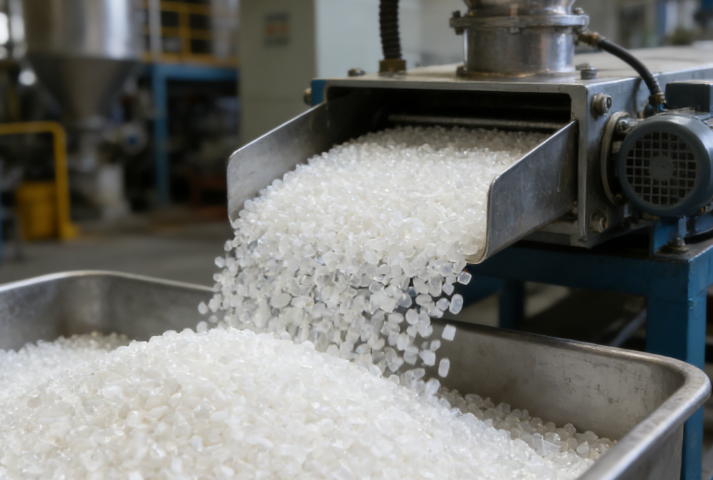
Feeding section:Set temperature near the material softening point (30-50℃ lower than the homogenization section), only for preliminary material softening and smooth conveying, preventing screw sticking and bridging.
Compression section:Set temperature at the lower-middle limit of the recommended range, the core plasticizing area to transition materials from solid to molten state, ensuring no raw material particles and uniform plasticization.
Homogenization section:Set temperature at the median of the recommended range (increase by 5-10℃ for thin-walled products) to ensure uniform melt melting and stable viscosity, providing consistent fluidity for cavity filling.
Practical check:Continuous melt ejection without air bubbles, raw material or uneven viscosity indicates qualified plasticization; air bubbles mean high temperature or material moisture absorption (cool down and dry materials); raw material requires gradual temperature increase of compression and homogenization sections.
(2) Nozzle Temperature: Slightly Lower to Prevent Drooling and Clogging
Nozzle temperature directly affects the initial melt filling state, generally set at 5-10℃ lower than the homogenization section to balance fluidity and anti-drooling.
Fine adjust by 5℃ each time if nozzle clogging or product short shots occur during trial molding; lower nozzle temperature and reduce injection pressure if melt drooling or flash at the mold gate appears.
For hot runner molds, control each gate's temperature independently with a temperature difference within ±3℃, avoiding inconsistent product filling caused by uneven gate temperature.
(3) Mold Temperature: Adaptive Control for Uniform Cooling Setting
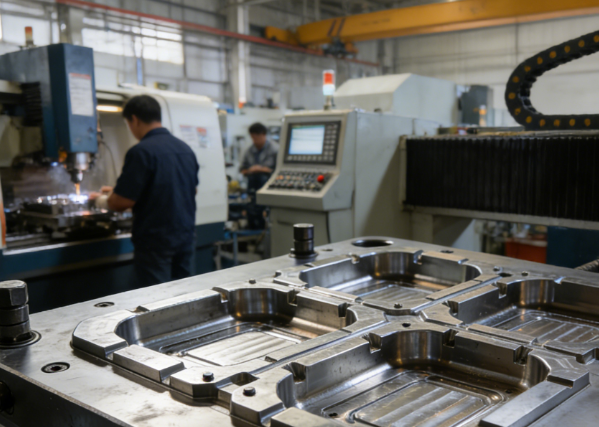
Mold temperature determines product cooling rate and crystallinity, the key to dimensional accuracy and warpage prevention, with the temperature difference between cavity and core ≤5℃ to avoid uneven cooling deformation.
Crystalline materials:Properly raise mold temperature (PE:40-60℃, PA66:80-100℃) to ensure sufficient crystallization, improving product rigidity, wear resistance and dimensional stability; low temperature leads to insufficient crystallization, causing warpage, brittleness and large dimensional tolerance.
Amorphous materials:Keep mold temperature relatively low (ABS:50-70℃, PMMA:40-60℃) to accelerate cooling and reduce internal stress; high temperature prolongs cooling time, easily causing mold sticking and warpage.
Product matching:Lower mold temperature for thin-walled/small products to improve production efficiency; raise mold temperature for thick-walled/large products to avoid internal sink marks and voids.
Practical check:Use a mold temperature controller for precise temperature control and regularly check the cooling water circuit for unobstructed flow; qualified mold temperature is indicated by non-deformed products with qualified dimensions after demolding.
3. Correction Methods for Common Temperature-Related Defects
Adjust corresponding temperature parameters in reverse according to trial mold defects to avoid blind adjustment and expanded defects:
Short shots/incomplete filling:Improve melt fluidity by raising barrel (compression/homogenization sections) and nozzle temperatures by 5-10℃; increase mold temperature for crystalline materials simultaneously.
Sink marks/voids:Raise mold temperature for crystalline materials and appropriately increase barrel temperature for amorphous materials; extend holding time at the same time to avoid flash caused by single temperature rise.
Warpage/deformation:Calibrate the mold temperature controller to keep cavity-core temperature difference ≤5℃; lower barrel homogenization section temperature properly to reduce internal stress and accelerate cooling.
Flash/overflow:Prioritize lowering barrel homogenization section and nozzle temperatures; reduce mold temperature appropriately and fine-tune clamping force in coordination.
Obvious weld lines:Raise barrel homogenization section and mold temperatures to improve melt fusion capacity at the confluence and reduce weld lines.
Poor surface gloss/pitting:Gradually increase barrel compression and homogenization section temperatures; raise mold temperature properly to solve uneven plasticization and rapid cooling problems.
4. Key Practical Skills for Precise Debugging
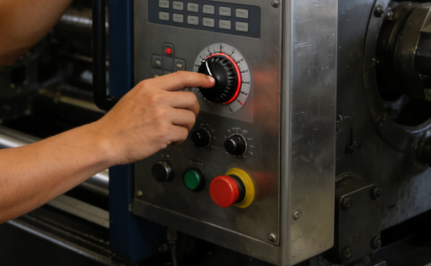
Preheat thoroughly before trial molding:Heat barrel and nozzle to the lower limit of the recommended temperature and insulate for 15-30 minutes (extend for large equipment); preheat molds with a temperature controller to avoid sudden cooling defects from cold molds contacting high-temperature melt.
Adopt small sample trial molding:Use a small amount of melt for initial trial molding to observe product state, reducing raw material waste before formal debugging.
Record and reuse optimal parameters:File the debugged optimal temperature parameters for the same material and product for direct reuse in subsequent production; only fine-tune within 5℃ for slight equipment/mold wear to improve debugging efficiency.
Calibrate temperature control equipment regularly:Check the accuracy of thermocouples, heating coils, mold temperature controllers and sensors regularly; replace aging parts in time to ensure the actual temperature is consistent with the display, with deviation within ±3℃.
Coordinate with other process parameters:Match temperature parameters with injection pressure, holding time, cooling time and screw speed; e.g., reduce injection pressure appropriately after raising barrel temperature to avoid flash; extend cooling time after increasing mold temperature to ensure full product setting.
Summary
Precise temperature parameter debugging in injection molding is a systematic work centered on material characteristics. It achieves the temperature balance of the entire melt plasticization, filling and cooling process through segmented barrel heating, precise nozzle temperature matching and adaptive mold cooling control. Follow the principle of gradual fine adjustment, correct parameters according to trial mold defects, and do a good job in equipment calibration and parameter archiving. Meanwhile, combine temperature debugging with product structure, mold performance and production requirements to balance product quality and production efficiency, realize the optimal configuration of temperature parameters, and ensure the stability and product consistency of injection molding production.