Rust Treatment and Anti-rust Protection for Plastic Molds
Plastic molds are prone to rust on cavities, cooling water channels and ejector pin holes due to contact with molten plastic, condensed water, humid storage or inadequate post-shutdown protection. The core treatment principle is graded rust removal by severity without damaging the mold steel substrate, polished surfaces and precision fitting dimensions, followed by passivation and anti-rust protection to prevent secondary rusting. Below are practical graded treatment methods and long-term anti-rust measures for plastic molds with different rust levels.
1. General Pre-treatment Before Rust Removal
Oil removal and thorough drying are mandatory for all rust levels to avoid rust remover failure and surface scratching:
Wipe the mold with a neutral mold degreaser (or alcohol/acetone) and soft brush to remove plastic residue, oil and release agent;
Blow out water in cooling channels with a high-pressure air gun and dry the mold completely with a hot air dryer;
Cover precision fitting parts (guide pillars, ejector pin holes, locating pins) with tape to prevent corrosion or grinding damage.
2. Graded Rust Removal Methods
(1) Mild Rust (Floating/shallow surface rust, no pitting)
Caused by short-term humidity or lack of timely oiling, treated by physical polishing only to protect surface finish:
Polish mirror/textured cavity surfaces with mold polishing paste and wool felt/cotton cloth at low speed; wipe textured surfaces gently to avoid texture damage;
Lightly grind parting/non-polished surfaces with 3000+ mesh sandpaper in one direction, then polish with 4000 mesh sandpaper to remove grinding marks;
Wipe ejector pins and holes with rust removal paste, then blow clean with a high-pressure air gun.
(2) Moderate Rust (Firmly attached rust, slight pitting, no obvious rust holes)
Treated with mold-specific neutral rust remover (no strong acid) combining chemical and physical methods:
Apply the rust remover on rusted areas, let stand for 5-10 minutes, then scrub gently with a soft brush;
Rinse the area repeatedly with clean water to remove remover residue, then dry completely and light polish to restore flatness;
For rusted cooling channels: Circulate diluted channel rust remover for 20-30 minutes, rinse with clean water and blow dry thoroughly.
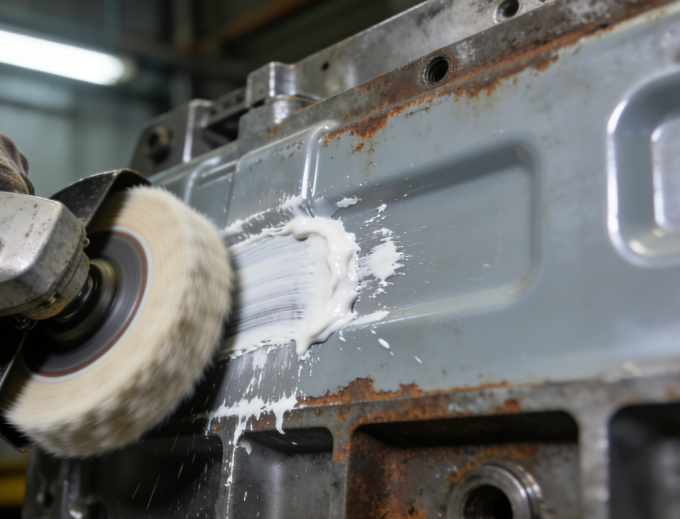
(3) Severe Rust (Deep rust, rust holes/spots, channel inner wall corrosion)
Caused by long-term humidity or un-repaired channel leakage, treated by physical grinding + chemical rust removal, with weld repair for severe pitting:
Rough grind with 1000-2000 mesh sandpaper to remove thick rust, then apply rust remover and scrub to clear deep rust;
For rust holes on non-polished surfaces: Grind flat, perform local weld repair with mold steel welding material, then re-grind and polish;
For slight rust holes on polished surfaces: Grind and polish step by step (2000→4000→6000 mesh); professional grinding repair is needed for severe holes;
For severely corroded channels: Replace copper/stainless steel pipes or conduct electroplating repair if rust and leakage persist after rust removal.
3. Critical Post-rust Removal: Passivation and Immediate Anti-rust
A bare metal surface forms after rust removal and is prone to rapid secondary rusting—complete passivation and anti-rust within 2 hours to form a protective film:
Overall passivation: Apply mold steel passivator evenly on all metal surfaces, let stand for 15-20 minutes to form a dense passivation film, then rinse with water and dry thoroughly;
Immediate anti-rust:
Short shutdown (≤7 days): Spray light mold anti-rust oil on the surface, wipe polished cavities gently; inject anti-rust agent into cooling channels;
Long shutdown (>7 days): Coat with heavy anti-rust grease, seal the mold with anti-rust film and moisture-proof bag, and store on a dry rack.
4. Long-term Anti-rust Measures
Rust removal is temporary; avoid rust from the source with production maintenance + shutdown protection + storage control:
(1) Daily Production Protection
Check cooling channels for leakage weekly, clean with descaling agent to prevent scale; drain and blow dry channels immediately after production;
Remove cavity residue and release agent in time; spray a thin layer of anti-rust oil after each shift;
Add high-temperature lubricating grease to ejector pins and guide pillars regularly to form an oil film.
(2) Standardized Shutdown Protection
Fully remove residue and oil after mold disassembly, dry completely, passivate and then coat with anti-rust oil;
Wrap precision parts with anti-rust paper to avoid collision and rust; paste anti-adhesive tape on parting surfaces.
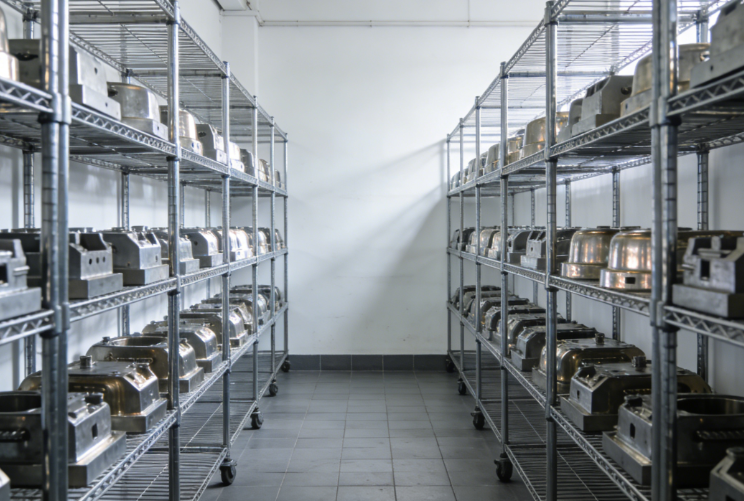
(3) Storage Environment Control
Keep storage area dry (humidity 40%-60%) with dehumidifiers and exhaust fans; avoid ground moisture;
Place molds on dedicated dry racks, away from water and acid-alkali materials;
Inspect inventory molds monthly; reapply anti-rust oil if re-rusting is found.
5. Key Notes
Never use strong acids (hydrochloric/sulfuric acid) for rust removal—they corrode mold steel, damage polished/textured surfaces and cause decarburization, reducing mold hardness and service life;
Prioritize physical polishing for mirror/high-gloss textured cavities; minimize chemical rust remover to protect finish;
Ensure no residual moisture in all post-rust removal steps, especially in cooling channels and pin holes—blow dry repeatedly with high-pressure air gun;
Adjust anti-rust for different steels: Focus on passivation for stainless steel (e.g., S136); increase oil coating frequency for carbon steel (e.g., 45# steel) to prevent rapid rusting.